Case Study
Mailchimp: Marketing Education
“The goal wasn't to teach how-to; we had a detailed knowledgebase to answer the questions about the buttons and dials. Our job was to teach why.”
What I did
- Concieved, founded and led a department producing educational content
- Supported day-to-day operations and product launches, while innovating a new product
- Learned and taught business growth thru multichannel marketing
- Audited content: Keep/Edit/Kill across all offerings.
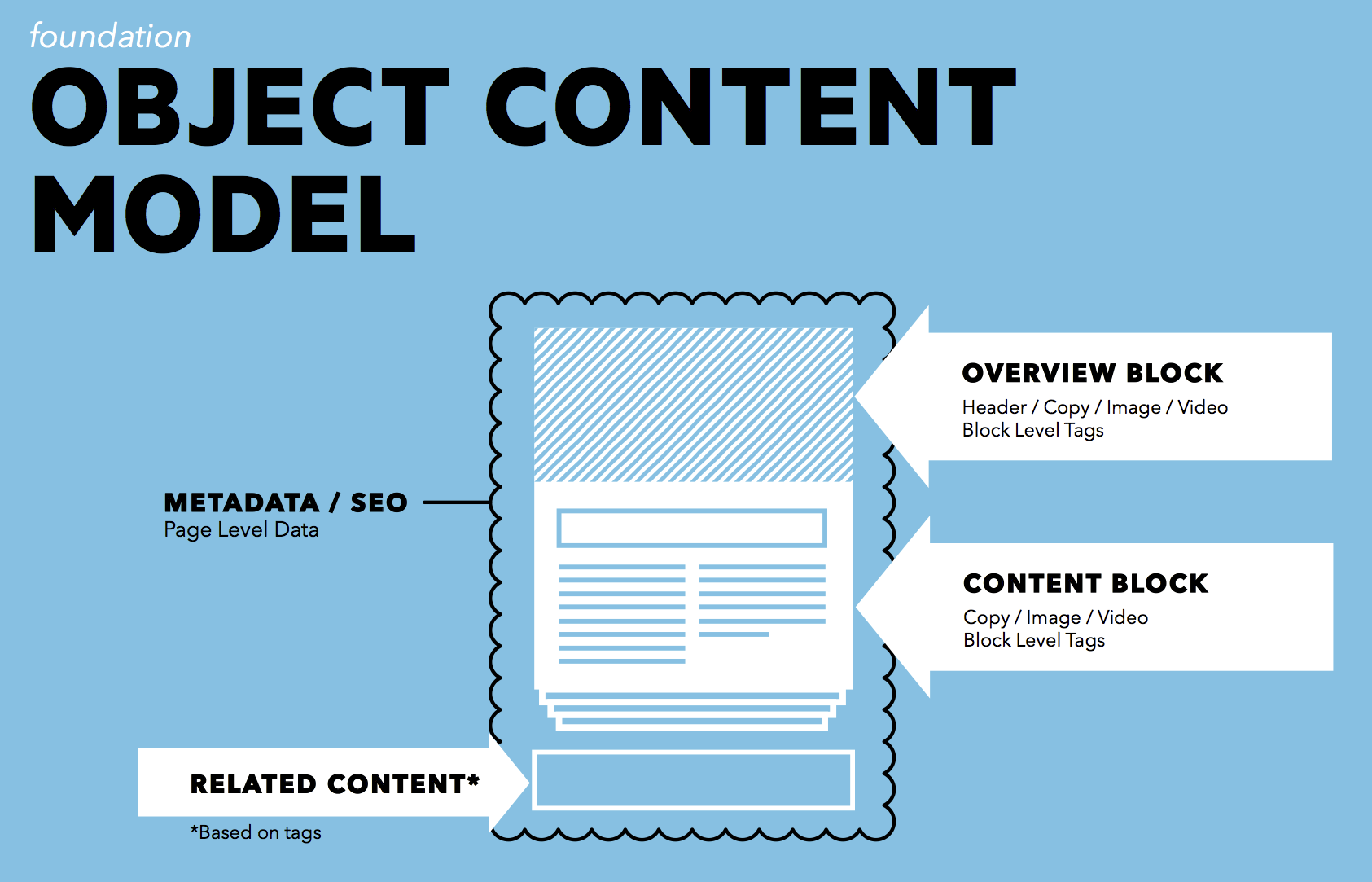
- Surviving content was modeled for structure inside a CMS we built
- Built a customized CMS to match our content model using WordPress and custom fields
Long Story Long
The Scenario
At Mailchimp, while working on a sweeping redesign of Mailchimp-Dot-Com and its associated subdomains, we ran across a couple vexing issues. Instructional content for beginners, from screenshots to instructions, was woefully out of date–often just flat out incorrect. More recent, valid content was hosted on Mailchimp’s knowledgebase, a separate project on a separate server, with a fraction of the traffic to the dot-com. Most importantly, help wasn’t available where you needed it: right in front of you, in the application, while working on an aspect of a campaign.
Our research group confirmed it: learning Mailchimp wasn’t too difficult but learning the larger disciple known as "Marketing" sure was. You see, to small business owners, marketing is a black box that you hurl money into, hoping more comes out than you pitched in. After a bit of lobbying and pressing, I founded and led a education department with the mantra of creating detailed instruction about multichannel marketing.
The goal wasn't to teach how-to; we had a detailed knowledgebase to answer the questions about buttons and dials. Our job was to teach why, and our goal was to advance customers along their journey toward marketing proficiency in marketing by creating and deploying deep educational content, mapped to different points across a customer’s journey, displayed on the dot-com but with the technical flexibility to surface some or all in the application itself.
The Solution
To design our solution, our group had to:
- Understand the challenges customers face in becoming strategic in their marketing efforts.
- Understand acquisition and churn
- Design the content that solves customer problems
- Execute and evaluate our content solutions
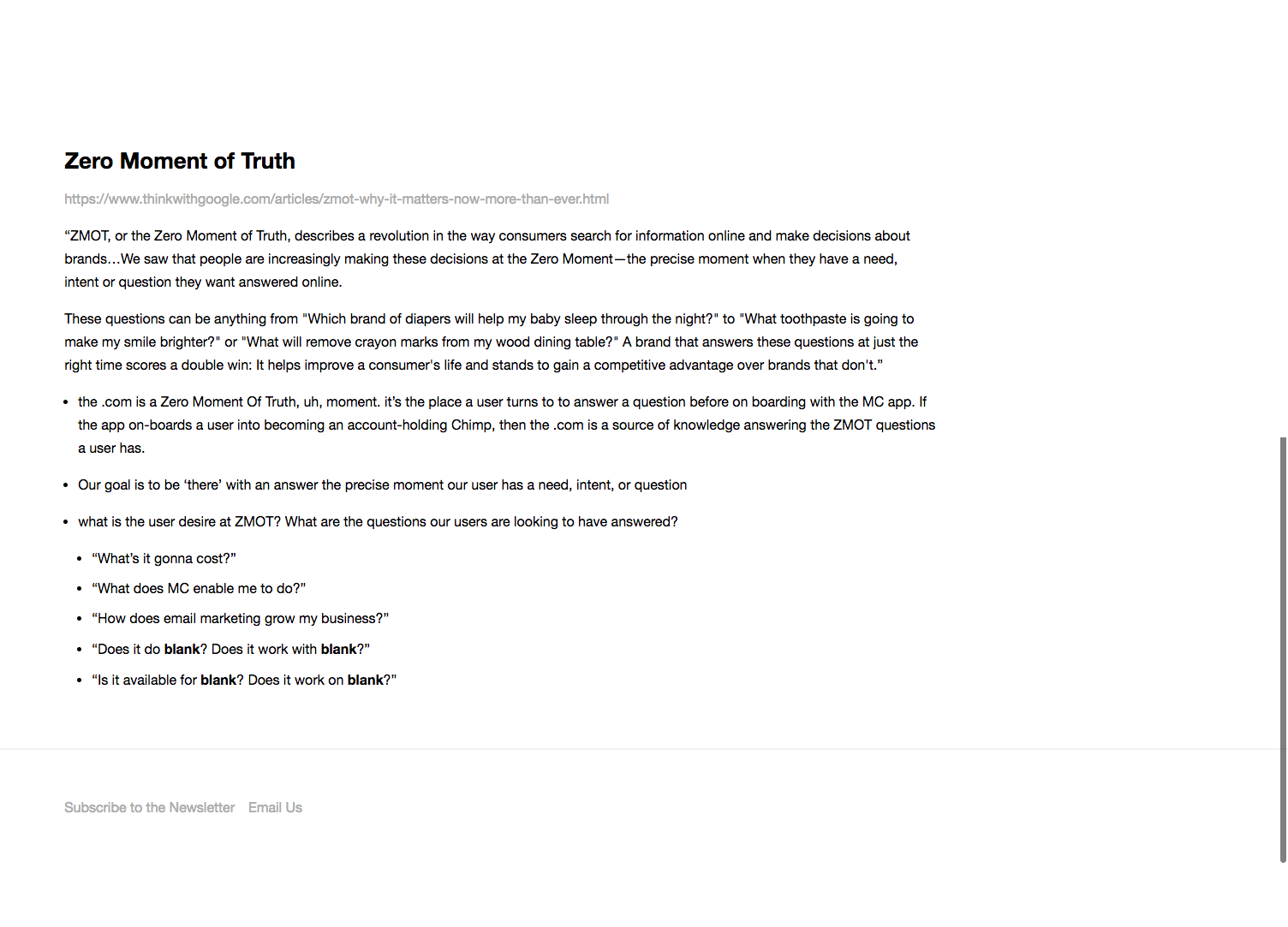
And, yet again, another troublesome issue popped up. While our group worked for Mailchimp, we spent little time working with Mailchimp. Sending an email is easy; growing a business with limited time and resources using online software is really, really difficult. We needed real world experience to become better instructors. Enter the stray cats!
I created a program dubbed The Stray Cat Program, where individuals in my department adopted a local business, assisting them in using Mailchimp to grow. I worked with a local hairdresser, converting her paid Constant Contact account to a free Mailchimp account, segmenting her list by location, and helping her market her availability to her customer base in three cities across the country. Another employee worked with a shoe store in our building. And another, with a “stylish baby boutique” selling clothing, cribs, gifts, and more. We gained first-hand knowledge about creating an account, building a list, advertising and email marketing in the support of business growth – what works and what doesn't.

The Outcome
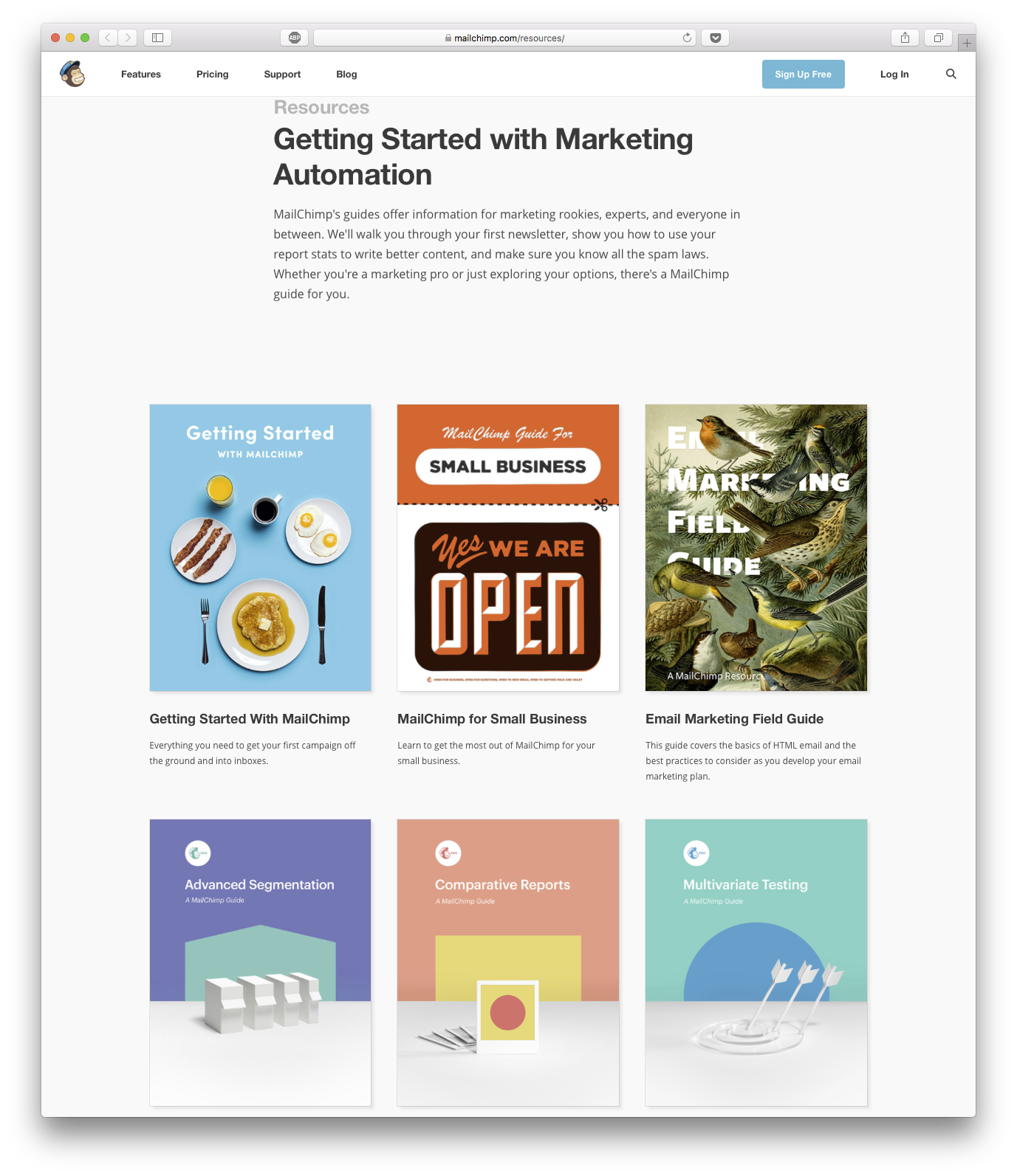
We designed a section of Mailchimp’s web site, called “Resources” (clever, I know. We were erring on the functional side of things) to deliver lessons. Our first step was to audit existing content, performing the classic “Keep, Edit, Kill” on anything instructional that existed on the dot-com. We closed the gaps exposed by our audit by creating new guides for beginning customers, or customers converting from other platforms. Our second step was to model content; we followed up by wireframing a content application
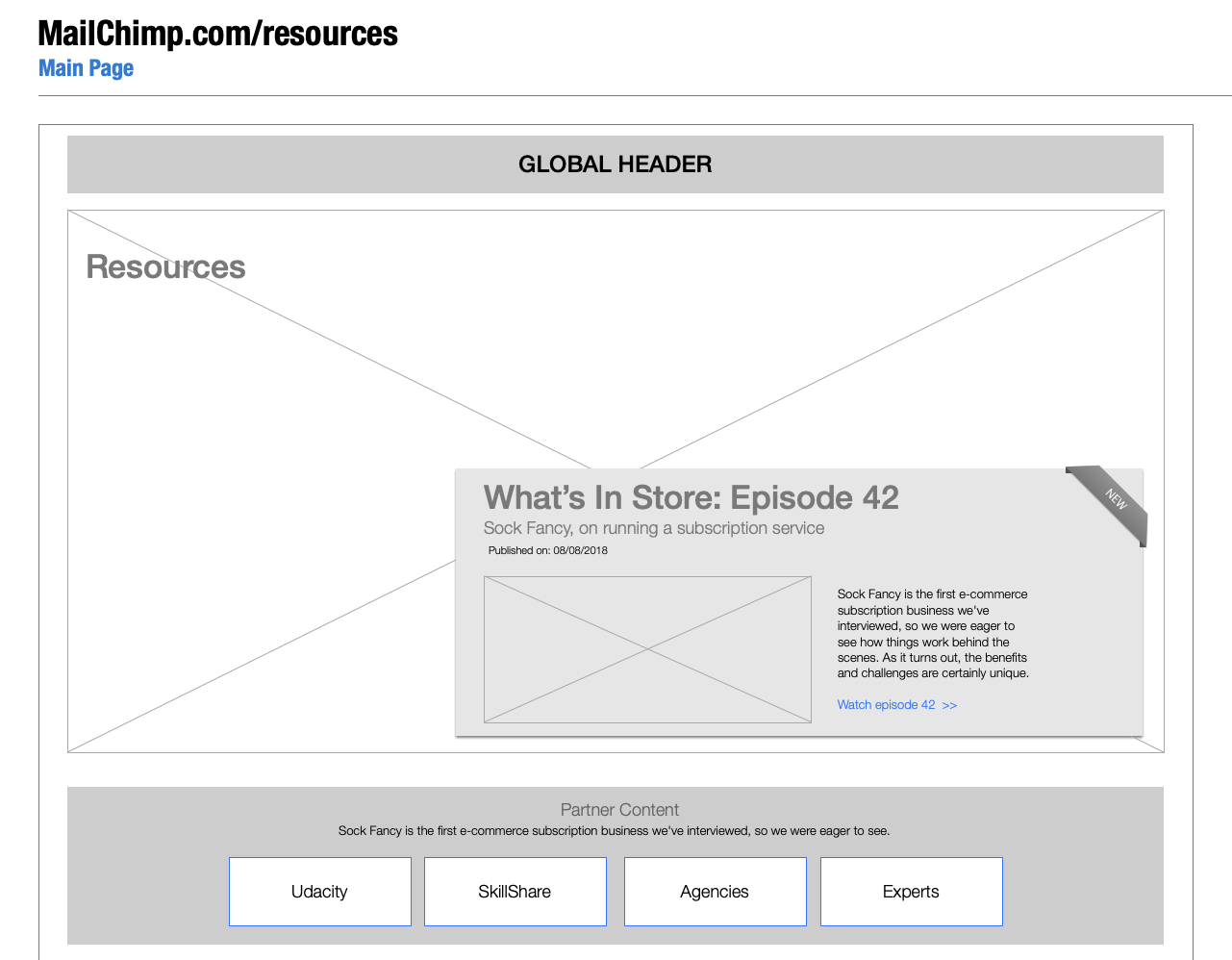
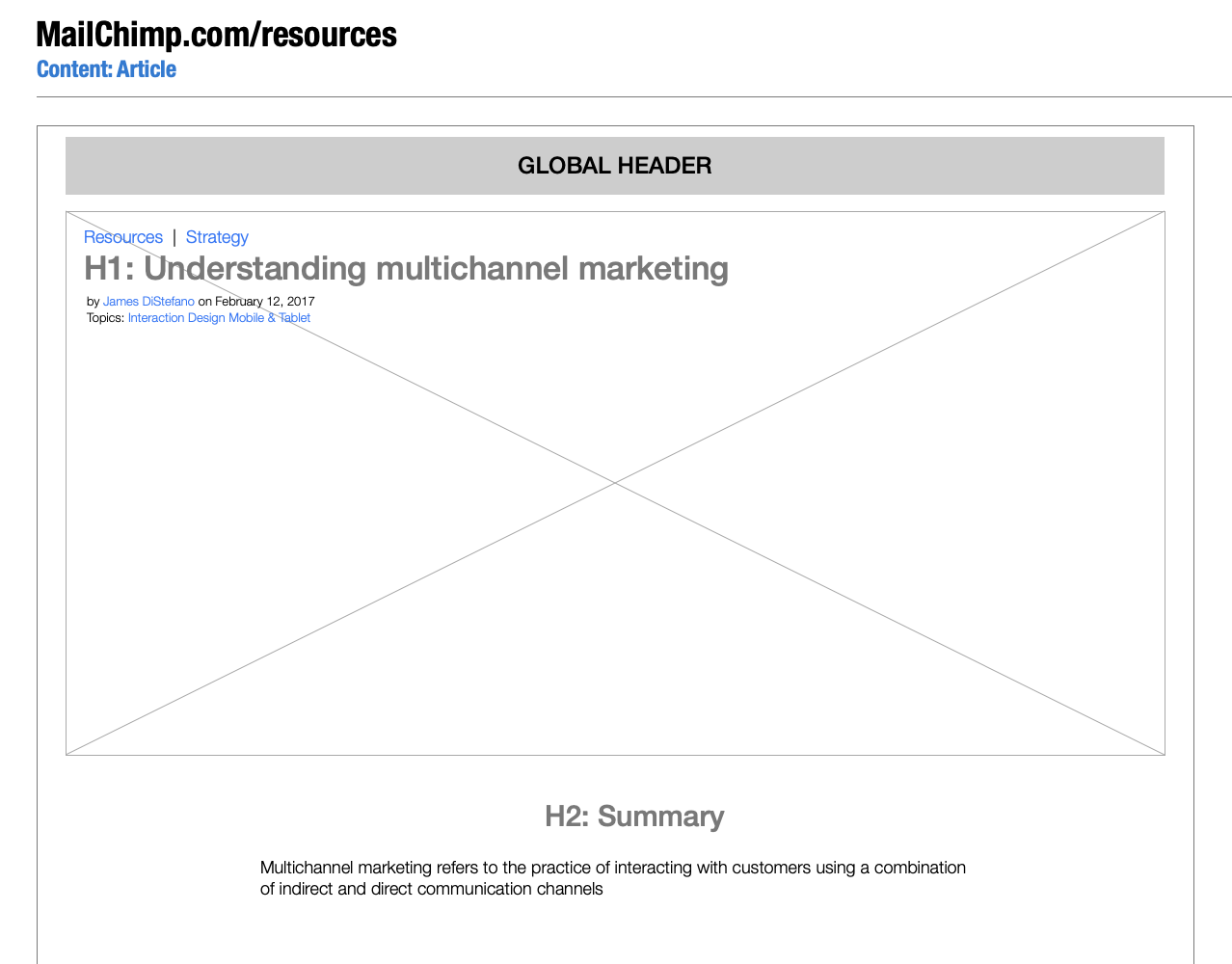
We partnered with external dev resources to build our new home. Our site was built on WP-Engine's hosting platform, with custom WordPress fields that matched our content model. Audited content was published immediately, and a calendar of new content was generated. We synced our blog calendar to the publishing schedule, marketing our new content as we completed and published it. Resources launched as I departed Mailchimp.